Preventing bystander drownings for National Water Safety Forum
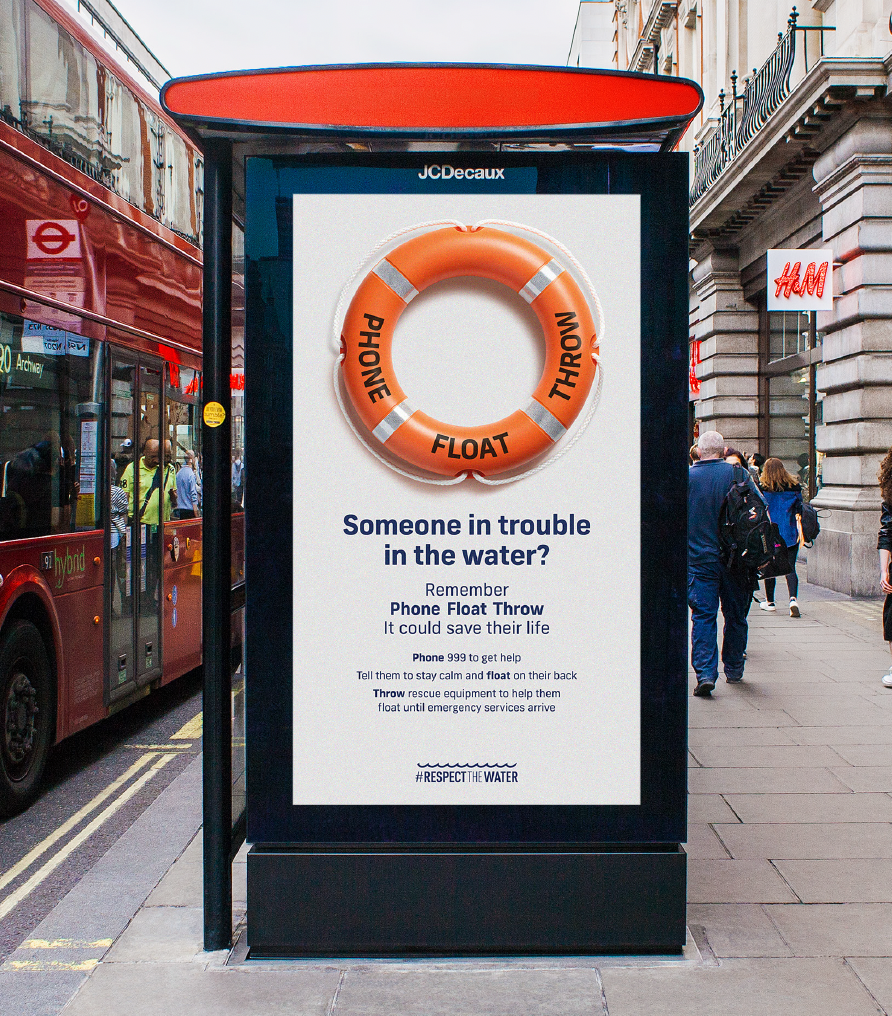
Accidental drowning remains a preventable cause of death across coastal and inland waters. Many are witnessed by bystanders who present an opportunity to help through effective action, and this action needs to be clear and memorable.
The National Water Safety Forum (NWSF) sought to strengthen understanding of bystander action for water‑related emergencies by reviewing its Call Tell Throw campaign, within its wider Respect The Water programme, with Claremont’s support.
Aims and Objectives
The project aimed to (1) improve clarity and recall of bystander instructions, (2) shift behaviour toward safe and effective action, and (3) support consistent adoption across the NWSF.
Methods
A multi‑stage behavioural‑insight process was employed, including a previous campaigns and evidence review, stakeholder and member interviews/workshops, and extensive qualitative research with the bystander audience. Core messaging and creatives were iteratively tested through audience focus groups.
Results
Testing showed a repositioning of bystander instructions to Phone, Float, Throw improved comprehension and was more intuitively associated with effective action. Public testing highlighted increased confidence to act and improved recall. NWSF members have supported the change and the creative campaign and have been provided with their own toolkit full of customisable assets. At the time of writing, the campaign is yet to launch publicly, but has been well received by stakeholders with a launch set for later this year.
Conclusions
The work demonstrates that behaviour‑change principles, design and testing conducted with stakeholders and audiences can strengthen water‑safety communication. Phone, Float, Throw provides a unified approach for reducing risky public behaviours and increasing bystander efficacy in these emergencies.