Webinar: Public and Patient Involvement: How to Do It Well – and Why It Matters

Jenny Prout on Apr 14, 2026
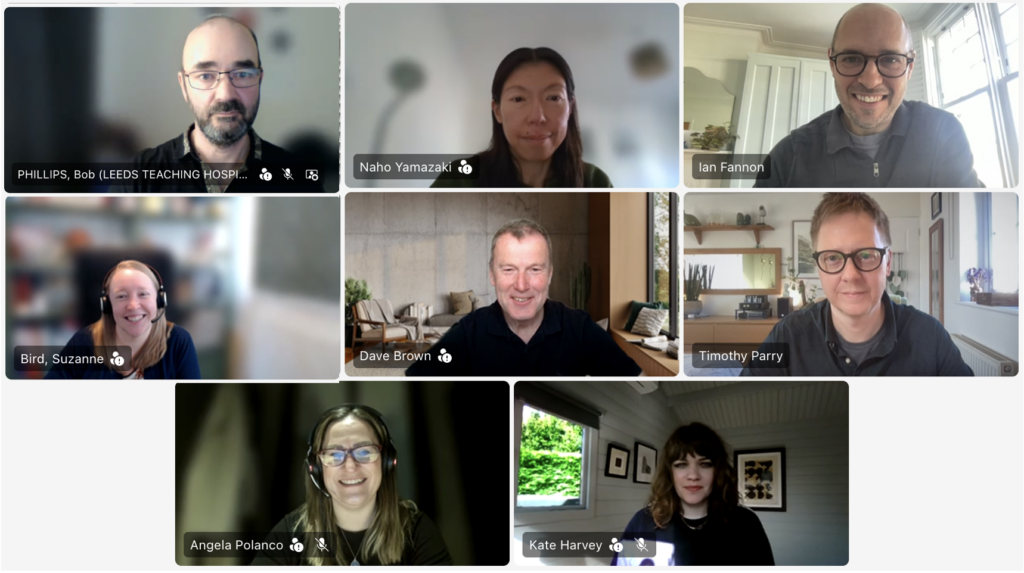
For our latest webinar, we explored how public and patient involvement and engagement (PPIE) can move beyond a compliance exercise to become a genuine partnership that improves research design, recruitment and outcomes.
Ian Fannon, Managing Director at Claremont, opened by setting out the challenge: despite strong consensus on the value of PPIE, it is still too often late, tokenistic and unrepresentative. Drawing on Claremont’s work with major programmes including Our Future Health and the NHS‑Galleri trial, Ian shared practical examples of how early, well‑designed involvement can shape not just study protocols, but the way trials are communicated, trusted and experienced by participants – particularly those from underserved communities.
Ian also introduced SIGNUP, a new PPIE framework designed specifically to support recruitment and communications, not just trial design. SIGNUP focuses on six principles: Share the Pen, Insight into Invitation, Guardrails, Networks, Usability, and Pilot & Prove – offering a simple, memorable structure to help teams translate public insight into clearer, more inclusive invitations to take part in research.
Our Chair, Claremont Director, Tim Parry interviewed Dave Brown, a public contributor with lived experience, about what meaningful involvement feels like in practice and what makes PPIE rewarding rather than extractive.
Tim, Ian and Dave were joined by leaders from across the UK research landscape to explore the barriers to high-quality PPIE and how they can be overcome in practice for a panel discussion, including:
- Dr Angela Polanco, National Head of Public Partnerships, NIHR
- Kate Harvey, Head of Participant and Public Involvement, Our Future Health
- Naho Yamazaki, Deputy Director of Policy and Partnership, Health Research Authority
- Suzanne Bird, Recruitment Strategist, Pfizer
- Professor Bob Phillips, Professor of Paediatrics and Evidence Synthesis, University of York and Hull York Medical School; Honorary Consultant in Paediatric and TYA Oncology, Leeds Children’s Hospital; Director, Candlelighters Supportive Care Research Centre.
Our panel explored what good and bad PPIE looks like across sectors, how to build trust, and how to involve people proportionately and ethically across the life of a study.
Key themes included:
- Starting involvement early, while real decisions are still open
- Being clear about the scope of influence and feeding back what changed
- Designing involvement around people’s real lives, not academic convenience
- Investing in clarity, usability and trusted networks to support diverse participation
A recording of the session is available to watch below:
About our panellists and speakers:
 Dr. Angela Polanco:
As the National Head of Public Partnerships at the National Institute of Health and Care Research Research Delivery Network Coordinating Centre (NIHR RDNCC), Angela leads the national function for PPIE, focused on embedding public voice into the research delivery landscape and building meaningful, lasting relationships with a variety of stakeholders including policy makers, community organisations, charities and research funders. Starting her career as a midwife, she quickly transitioned into research delivery, earning her Masters and PhD exploring methods of communication about risk for adult childhood cancer survivors during pregnancy and birth. Beyond her professional role, she’s a dedicated parent advocate and an international PPIE representative for childhood cancer research.
 Kate Harvey:
Kate is Head of Participant and Public Involvement at Our Future Health, where she leads the research programme’s deliberative and dialogue work; and works closely with members of its Public Advisory Board and Involvement Network. Prior to her role at Our Future Health, Kate led on involvement and communication strategies for Genomics England’s Generation Study. Her former roles as a researcher at the Nuffield Council on Bioethics, and at the University of Edinburgh, allow Kate to bring ethical reflections – particularly with respect to trustworthiness in health research – to involvement contexts.
 Naho Yamazaki:
Naho is Deputy Director of Policy and Partnerships at the Health Research Authority, where she is leading on a range of initiatives for the HRA to meet its mission to make it easy to do research that people can trust. This includes pushing for change to ensure research participants are representative of the people who will be impacted by the findings of research, embedding meaningful patient and public involvement and engagement in research, and making research transparency the norm. She joined the HRA in September 2019, having worked on developing and influencing a range of life sciences policy and strategy at the Wellcome Trust, NSW Ministry of Health in Australia and the UK Academy of Medical Sciences.
 Professor Bob Phillips:
Bob is a Professor of Paediatrics and Evidence Synthesis at the Centre for Reviews and Dissemination at the University of York and Hull/York Medical School, and an Honorary Consultant in Paediatric / Teenage-Young Adult Oncology at Leeds Children’s Hospital, and Director of Candlelighters Supportive Care Research Centre.
He’s worked since the beginning of his academic career to answer questions arising from the concerns of patients and their families, and has researched, written and promoted PPIE with young people for over twenty years. He still doesn’t quite know how to do it and keeps learning what could be done better.
 Suzanne Bird: Suzanne leads the development of patient‑centred recruitment and retention strategies across clinical research programmes at Pfizer. Working alongside cross‑functional teams, sites, patients, and advocacy groups, Suzanne is passionate about embedding meaningful patient and public involvement (PPI) early and throughout the research lifecycle. Her work focuses on improving study accessibility, relevance, and inclusivity, ensuring patient voices meaningfully inform study design, delivery, and outcomes. Suzanne brings a practical, evidence‑based perspective on how PPI strengthens both scientific quality and commercial success.
 Dave Brown: Dave spent 40 years in a corporate career, mainly in Financial Services, before requalifying in a new career as a Life Coach, running his own coaching business since, supporting organisations within the public, private and charity sectors. Dave is also a podcaster and prolific charity volunteer.
During lockdown, Dave received an official Bipolar diagnosis (after 37 years) and got involved in Public and Patient Involvement and Engagement (PPIE). Initially this was with the National Centre for Mental Health in Cardiff, but since he has contributed to projects at Cardiff School of Medicine, the Oxford Bipolar Disorder Research Clinic, Cardiff University Brain Research Imaging Centre, an EU wide Hypertension research project (Hypermark) and now with Akrivia Health’s GlobalMinds project.