Bitesize webinar: Changing the Story on Unpaid Care

Jenny Prout on Jul 22, 2026
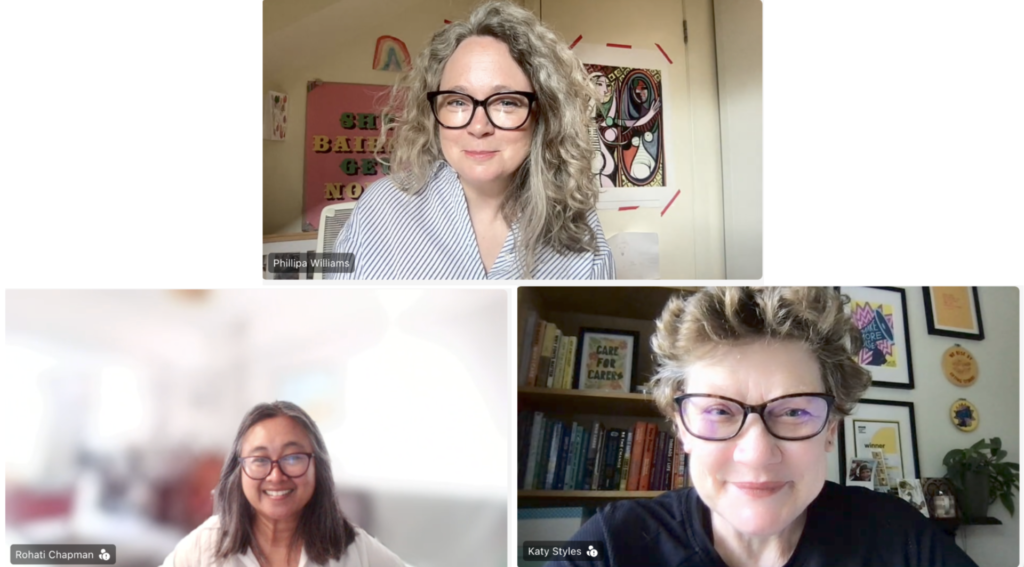
For our latest Bitesize webinar, Phillipa Williams was joined by Rohati Chapman, Executive Director at Carers Trust, and Katy Styles, founder of the We Care Campaign, to explore how we can reshape the way society talks about unpaid care.
Drawing on research commissioned by Carers Trust, the Health Foundation and Oxfam GB, the session examined how the stories we tell about unpaid care influence public understanding, policy priorities and support for carers.
The discussion highlighted a key challenge: while millions of people provide unpaid care for family members and friends, care is still often framed as a niche issue or portrayed through narratives of heroism, sacrifice and resilience. Speakers outlined how these well-intended messages can unintentionally reinforce the idea that carers should simply cope alone, rather than prompting investment in the support systems that make caring possible.
During the session, we introduced three evidence-based framing principles designed to shift the conversation:
- The first positions care as a universal experience, recognising that most of us will either provide care, receive care, or both during our lives.
- The second emphasises that good care is supported care, the importance of talking about the support that is required to make care happen.
- The third encourages organisations to centre those providing and giving care at the centre – and ensuring that the system is seen to be in support of them, rather than their value being connected only to the support they provide to the state – e.g the treasury or NHS.
We explored how organisations can put these principles into practice, from reviewing website copy and campaigns to rethinking fundraising, policy and public engagement messages. Rohati and Katy shared their experiences of embedding the framing approach within their own work, stressing the importance of experimentation, reflection and collective action across the sector.
The session concluded with a call for organisations beyond the carers’ sector to recognise unpaid care as an issue that connects to wider conversations about health, inequality, work and social care reform.
Changing the story about unpaid care is not about finding new language for its own sake. It is about helping more people understand why care matters to all of us, and building stronger public support for the systems that enable people to care well.