“It’s coming home!” Why I think the World Cup is a behavioural scientist’s playground

Tiago Moutela on Jul 1, 2026
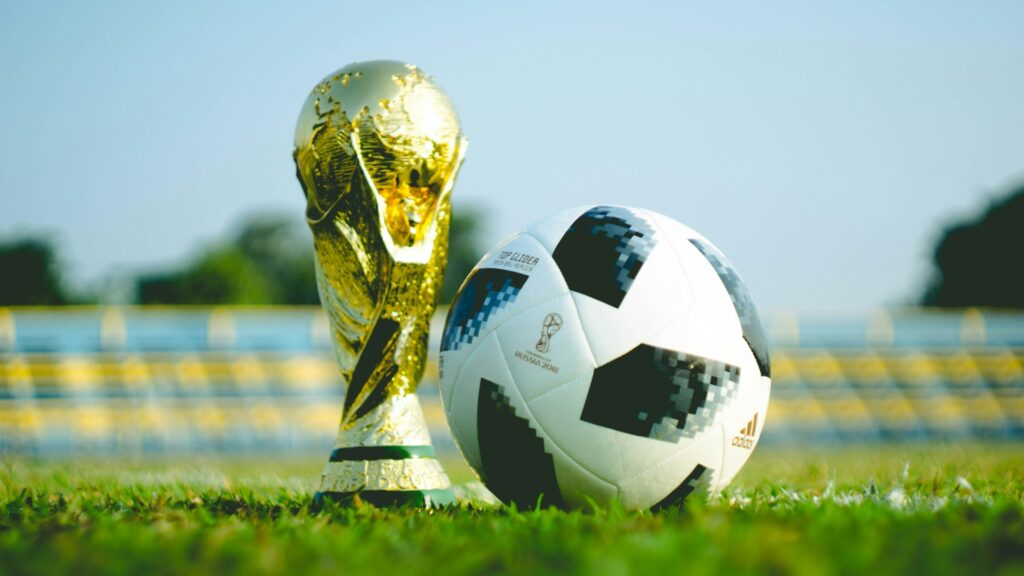
Earlier this week, a colleague at Claremont said: “I don’t like football, I never watch it, but I’m loving the World Cup. I even have matches on in the background when I’m doing bits around the house.”
Full disclosure…I like football. I also like thinking about the psychology behind people’s behaviours and decision making. Eleven people on a pitch representing an entire nation, kicking a round object into the net of eleven others representing a different nation. I mean… what’s not to like?!
But that comment stuck with me. Partly because of the bold claim “I don’t like football”… I mean, how could anyone not?! And partly because it perfectly captured something fascinating that I’ve been thinking about. Major events, and the World Cup in particular, have a unique ability to pull people in. Even those who are not typically engaged.
It becomes less about the event and more about something deeper. More human!
In this World Cup people who normally make sensible, measured choices, suddenly decide that sleep is optional and that rearranging schedules around kick-off times is entirely rational. Some even think that shouting at the TV is a legitimate coping mechanism (who… me? Never!).
From a Behavioural Science and Psychology perspective, this is less surprising than it might seem. What look like irrational behaviours are actually a predictable response to a powerful mix of identity, emotion and social influence. Playing out at scale!
Let’s break it down.
Social Identity
At the heart of it all is our deeply ingrained need to belong.
The moment the World Cup kicks off, we start anchoring ourselves to something. Teams, nations, cultures, or even the classic “I travelled there once, I’m rooting for them”. Some of us even go digging through wardrobes to resurrect old national team shirts we haven’t worn in years (again… me? Never!).
Whether it’s the country you were born in, or a country of your partner; or even the country where someone you work with is from. Social Identity Theory kicks in. Suddenly, “they” become “us.”
And once that shift happens, everything feels more personal. And you really…really want them to do well!
Mental Shortcuts
Once we’re emotionally invested, our decision-making starts to lean on familiar shortcuts.
Here are the classics which I heard this week:
- Last-minute winner? “This is it. It’s meant to be! This is our year”
- Poor group stage performance? “We did that last time and we went all the way
through. It’s meant to be! This is our year!” - Dubious refereeing decision? “It’s always against us. Every time. Happened the same
last time!”
Ah… Our good old Confirmation Bias. We latch onto anything that vaguely confirms our theory (or hope…), focusing on selective evidence that supports what we already believe about “our” team and quietly ignoring anything that doesn’t.
Pair that with football’s ever-present Optimism Bias (“it’s definitely coming home”; “there’s still 2 minutes left, we can still win”), and suddenly we’re all able to forecast the future with very flexible and dubious standards of evidence.
Herd behaviour
And then… the environment takes over.
When everyone around us is watching, messaging, talking, reacting, and emotionally investing time and energy, it becomes incredibly easy to follow along. Not because we make a deliberate decision, or because we necessarily love football, but because it just feels… natural.
This is Herd Behaviour in action.
Add in a bit of FOMO (Fear Of Missing Out), and we end up watching two teams we’ve never heard about playing a midnight kick-off. After all, everyone will be talking about it at work tomorrow won’t they!
And just when we think you might skip the final match of the day, along comes the Sunk Cost Fallacy:
“Well… I’ve watched every match today anyway, so might as well just watch the last one. It’s meant to be a good one!”
Before we know it, we’re three weeks in and explaining to a colleague at work the goal difference scenarios that played a role in getting a team through the group stages.
What’s fascinating is how all of this extends well beyond sport. Events like the World Cup create moments where people align with each other. Socially and behaviourally. They spark conversations, debates, create shared experiences, and bring people together in ways that don’t usually happen.
On one hand, those things alone can boost mental wellbeing, social connections, and a deep sense of belonging and pride. On the other, it can encourage alcohol consumption and long periods of inactivity. Same human tendencies. Different outcomes.
So when my colleague said they didn’t like football but found themselves watching anyway. They were not talking about football. They were talking about context.
They were talking about being surrounded by people, cues, conversations, signs, emotions and shared moments that make their behaviours feel easy and natural. Inevitable even.
And that’s the key point.
Behaviours don’t happen in a vacuum. They exist and happen in context. They happen in environments shaped by social norms, timing, emotion, and the people around us.
If we want to understand behaviour in whichever sector we are talking about, we can’t just focus on individuals. We must look at the setting they’re in, the signals they’re exposed to, and the norms and the forces acting on them in that moment.
If you look closely, the World Cup just makes those forces a lot easier to spot.
And honestly? I’m here for it!